Care and Maintenance
Fine jewelry is meant to be worn and enjoyed every day, but like anything precious, it rewards those who look after it. A diamond ring that sparkles brilliantly on its wedding day can look dull within months if it is never cleaned. A silver chain left in a drawer can turn black before its owner even notices. The good news is that care and maintenance does not require laboratory equipment or expert skills — it simply requires understanding what threatens your jewelry and adopting a few consistent habits. This pillar page serves as your complete introduction to the subject, connecting every aspect of jewelry preservation into one clear, practical overview.
Why Jewelry Care Matters More Than You Think
Jewelry is one of the few possessions that is worn against the skin for hours, exposed to water, cosmetics, heat, friction and impact, yet rarely cleaned as often as a pair of glasses. Think of your jewelry like a car: it may look solid from the outside, but without regular servicing, small invisible problems accumulate until they become expensive failures. A loose prong, for example, can go unnoticed for weeks — until the diamond it was holding falls out on a sidewalk.
Beyond preservation, there is an emotional and financial dimension. Jewelry often carries sentimental value that no receipt can replace, and a well-maintained piece retains far more of its market value. In short, maintenance is not vanity; it is protection — of beauty, of money and of memories.
Understanding Your Enemies: What Damages Jewelry
Effective care begins with knowing what you are protecting against. Jewelry faces four main categories of threats:
- Chemical agents: Perfume, hairspray, hand lotion, chlorine in swimming pools and even household cleaning products can corrode metals, discolor pearls and dull gemstones.
- Physical impact: Knocks against door frames, gym equipment or kitchen counters can chip softer stones like opal, amethyst or emerald, and bend delicate bands.
- Build-up: Skin oils, soap film and dust accumulate behind stones and in chain links, dimming brilliance long before any actual damage occurs.
- Storage hazards: Pieces jumbled together in one box scratch each other — a diamond can scratch virtually every other gemstone and even gold itself.
A useful mental model is to treat each piece as a small ecosystem: metal, stone and setting all react differently to the same environment. Gold resists tarnish but scratches easily; silver resists impact but tarnishes rapidly; pearls are organic and even react to the natural acidity of your skin over time.
Daily Habits That Make the Biggest Difference
The most effective maintenance is invisible — small habits woven into your routine that prevent damage before it happens. Professionals often repeat the « last on, first off » rule, and it deserves its reputation:
- Last on: Put your jewelry on after dressing, applying perfume, lotion and hairspray. This limits contact with chemicals and reduces snagging on clothing.
- First off: Remove rings and bracelets before washing dishes, exercising, gardening, swimming or showering. Water itself is rarely the problem — what is in the water usually is.
- Wipe after wearing: A soft, lint-free cloth passed over the piece removes skin oils before they harden into residue.
Consider a concrete case: a person who wears an engagement ring while applying hand sanitizer and lotion several times a day will typically see the stone lose its sparkle within weeks, as film builds up behind the table of the diamond. The same ring worn with the « last on, first off » habit and wiped each evening can stay bright for many months between cleanings. The difference is not the jewelry — it is the habit.
How to Clean Jewelry Safely at Home
Home cleaning is safe and effective — provided you match the method to the material. The universal, gentlest approach works for most pieces:
- Fill a small bowl with lukewarm water and a drop of mild dish soap (never detergent with additives).
- Soak the piece for 15 to 20 minutes to loosen grime.
- Brush gently with a soft-bristled brush — a baby toothbrush is ideal — paying attention to the areas behind stones where build-up hides.
- Rinse in clean lukewarm water, ideally over a plugged drain or a tea strainer to eliminate the risk of losing the piece.
- Pat dry with a soft, lint-free cloth and let it air-dry fully before storing.
However, this method is not universal. Some materials demand special treatment:
- Pearls, coral and amber: Organic gems are porous and sensitive. Never soak them; simply wipe with a barely damp, soft cloth after wearing.
- Opals and turquoise: Avoid heat and prolonged water contact, as these stones can crack or change color.
- Emeralds: Many are treated with oils or resins to fill natural fissures. Ultrasonic cleaners and hot water can strip these treatments — use only lukewarm water and a soft cloth.
- Silver: Tarnish responds well to a dedicated silver polishing cloth; for intricate pieces, a mild silver dip followed by thorough rinsing works, but avoid dips if the piece contains porous stones.
- Costume jewelry: Glued stones and plated finishes can dissolve in water — dry wiping only.
One rule deserves to be repeated: never use ultrasonic cleaners at home on pieces you do not fully understand. These machines are powerful and can shatter fragile stones or shake loose settings that were already weakened. When in doubt, that is a job for a professional.
Proper Storage: Giving Each Piece Its Own Space
Storage is the most underrated aspect of jewelry care. The ideal storage environment is dry, dark, separated and padded. Humidity accelerates tarnish in silver, light can fade certain stones such as amethyst and rose quartz, and contact between pieces causes scratches.
- Store each piece individually in a fabric-lined compartment, a soft pouch or a sealed bag for silver (air exposure causes tarnish).
- Keep a small anti-tarnish strip in your jewelry box and replace it every few months.
- Store pearls away from sealed plastic bags — they need to breathe to keep their nacre from drying out.
- Remove pieces before storing them long-term if they are damp; moisture trapped against metal invites corrosion.
Think of storage as a wardrobe: you would not hang a silk shirt against a rough denim jacket. Each piece deserves its own « hanger. »
When and Why to Seek Professional Maintenance
Home care covers cleaning and prevention, but some tasks belong in professional hands. A jeweler’s inspection typically includes checking prong tightness, verifying that clasps close securely, examining mounts for wear, professional ultrasonic and steam cleaning where appropriate, and re-polishing or re-plating when needed. Most experts recommend a professional check-up once or twice a year for frequently worn pieces, and always before an important trip or event.
A helpful analogy is the dentist: you brush daily, but only a check-up catches the cavity you cannot see. A five-minute inspection can reveal a prong worn thin enough to lose its grip — a repair that costs a fraction of the stone it protects. Between visits, be alert to warning signs yourself:
- A stone that rotates or wobbles in its setting.
- A rattling sound when you gently tap the piece near your ear.
- Bent prongs, visible gaps, or a clasp that no longer snaps firmly.
- Chain links that catch or stretch noticeably.
If you notice any of these, stop wearing the piece and have it examined. Wearing compromised jewelry turns a minor repair into a loss.
Common Mistakes That Quietly Ruin Jewelry
Most jewelry damage is accidental and avoidable. Watch out for these frequent errors:
- Cleaning with toothpaste, baking soda or vinegar — household abrasives and acids scratch gold and can permanently damage soft stones.
- Wearing rings during swimming: chlorine weakens alloys and can slowly erode the metal around settings.
- Spraying perfume directly onto necklaces and earrings, which leaves a chemical film and can fade treated stones.
- Keeping all jewelry in one compartment, letting diamonds scratch everything else.
- Ignoring a loose stone because « it still holds for now » — settings rarely tighten on their own.
Building Your Own Care Routine
The best maintenance system is the one you actually follow. A simple, sustainable routine looks like this: daily wiping and mindful wearing, a gentle home cleaning once a month for frequently worn pieces, proper individual storage always, and a professional inspection once or twice a year. Adjust the frequency to your lifestyle — hands-on professions, frequent sports or humid climates all call for more attention.
Jewelry care is ultimately a form of respect: for the craftsmanship that created the piece, for the value it represents and for the story it carries. With the habits outlined above, even a complete beginner can keep their collection radiant for decades. Explore the detailed articles in this category to go deeper into each material, each cleaning technique and each storage solution — your jewelry will thank you, one sparkle at a time.
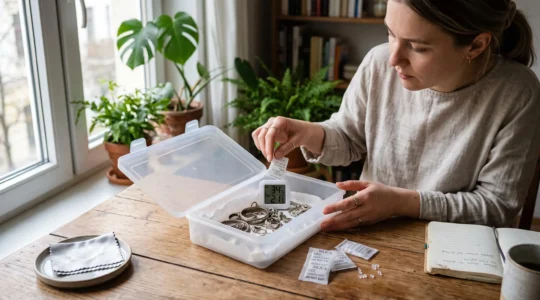
How Much Silica Gel Do You Actually Need for Effective Jewelry Storage?
A handful of silica gel packets might keep your silver jewelry dry—or provide almost no protection at all. The difference depends on the container’s internal volume, how much outside air enters, what materials are stored alongside the jewelry, and how…
Lire la suite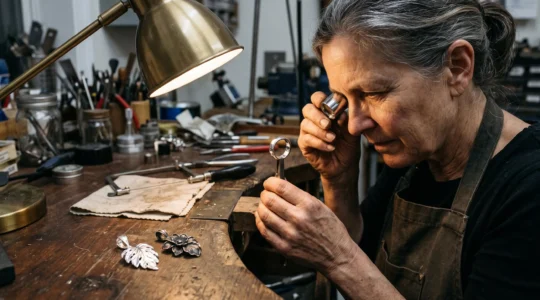
Is Rhodium Plating Worth the Cost for Your Silver Jewelry Collection?
Rhodium plating can be worth the cost for sterling silver jewelry that is worn regularly, tarnishes quickly, and demands frequent polishing. But it is not a permanent solution. The protective layer eventually wears, and re-plating can turn an apparently one-time…
Lire la suite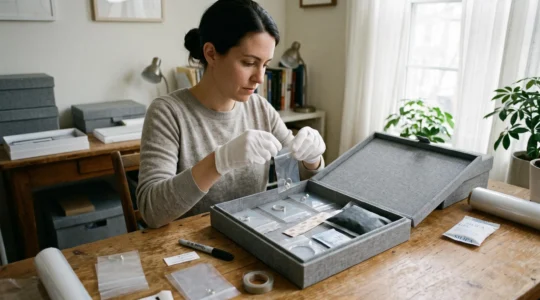
How to Create Museum-Quality Storage Environments for Silver at Home
Museum-quality silver storage is achievable at home without reproducing an institutional vault. The essential requirement is a controlled micro-environment that limits exposure to sulphur-containing gases, manages relative humidity and keeps potentially harmful packaging materials away from valuable objects. Silver tarnish…
Lire la suite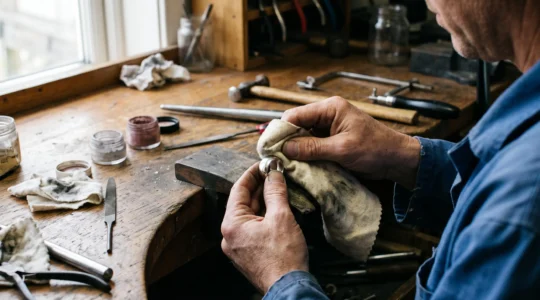
How to Maintain Showroom Polish on Silver Between Professional Services
A professionally polished silver ring can lose its crisp reflections long before it develops obvious black tarnish. Fine scratches, fingerprints, polishing residue and repeated contact with other jewellery gradually soften the mirror-like appearance. Restoring that finish aggressively every time it…
Lire la suite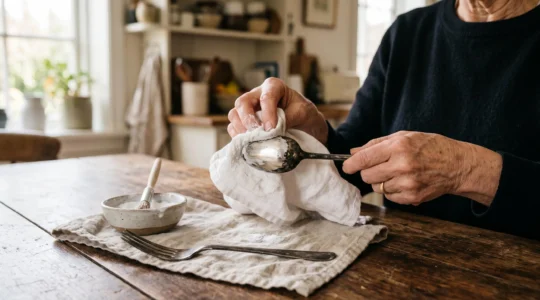
Which Household Ingredients Safely Clean Silver Without Commercial Products?
Warm water, mild dish soap, baking soda and aluminium foil are familiar household materials that can help clean silver, but they are not equally safe for every object. The best choice depends on whether the surface is solid silver, silver-plated,…
Lire la suite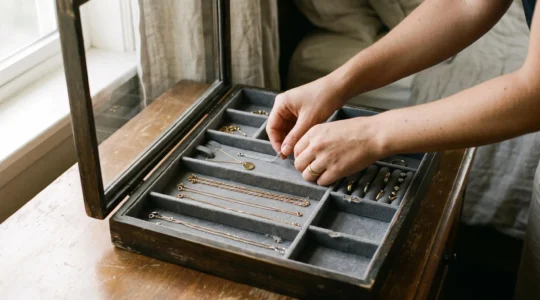
How to Design Jewelry Storage Systems That Prevent Damage and Save Daily Time
A jewelry storage system should do more than accommodate a collection. It should prevent pieces from touching unnecessarily, protect vulnerable materials from damaging environments, and make frequently worn jewelry easy to retrieve without disturbing everything else. The most effective approach…
Lire la suite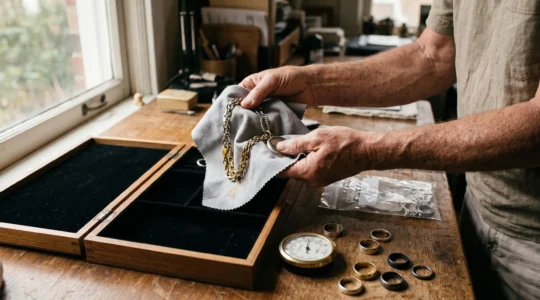
What Actually Prevents Silver Tarnish According to Materials Science Research?
Silver does not tarnish simply because it encounters air. The familiar yellow, brown or black discoloration develops primarily when silver reacts with sulfur-containing gases, forming a thin layer of silver sulfide. Humidity, surrounding materials and storage conditions influence how quickly…
Lire la suite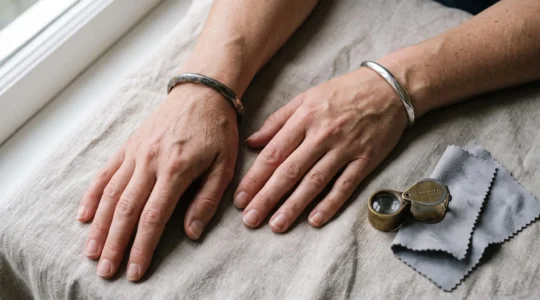
Why Does Silver React Differently on Different People’s Skin Chemistry?
Two people can wear identical sterling silver rings and notice remarkably different results. One ring remains bright, while the other develops dark patches, leaves marks on the finger, or appears dull after repeated wear. This difference does not automatically mean…
Lire la suite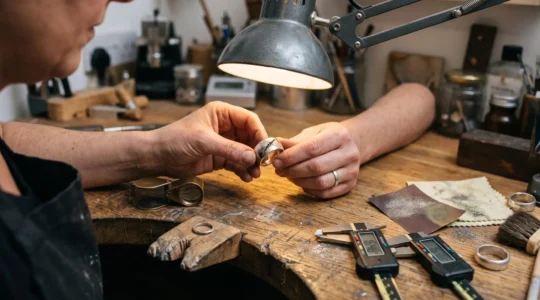
When Does Deep Scratch Repair Cost More Than Replacement Value?
Deep scratch repair costs more than replacement value when the total expense of restoring a silver item exceeds the cost of obtaining a comparable piece in acceptable condition. The decision becomes more complicated when eliminating a groove requires substantial metal…
Lire la suite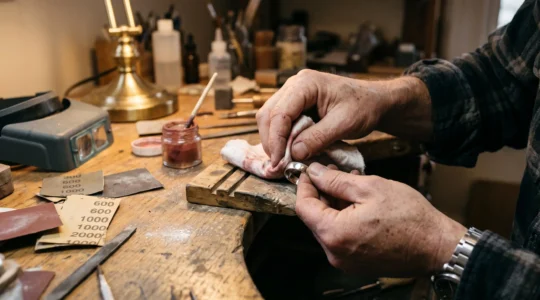
How to Achieve Jeweller-Quality Mirror Finish on Silver at Home
A jeweller-quality mirror finish on silver comes from progressively refining the metal’s surface until scratches become too fine to noticeably scatter reflected light. At home, the process combines careful surface preparation, increasingly fine abrasives, a suitable final polishing compound and…
Lire la suite