Fashion Accessories
Fashion Accessories: Much More Than a Finishing Touch
Accessories are to an outfit what punctuation is to a sentence: they set the tone, create rhythm, and can completely change the meaning of what you wear. In the world of bijouterie and joaillerie, fashion accessories occupy a special place, sitting somewhere between fine jewelry and pure ornament. This pillar page is designed as a complete introduction to the subject, whether you are building your first collection or simply trying to understand what makes a well-chosen accessory so powerful.
Think of this page as the trunk of a tree: each branch you explore here, from materials to styling rules, can be deepened through the articles of this category. Let’s start with the basics.
What Exactly Is a Fashion Accessory?
A fashion accessory is any item worn or carried that is not part of the main clothing itself, but which completes, decorates, or enhances it. The definition is deliberately broad, and that is its strength: accessories cover everything from a delicate silver chain to a structured leather handbag.
To make things clearer, here are the main families of accessories you will encounter:
- Jewelry: necklaces, rings, bracelets, earrings, brooches, and anklets.
- Watches: both functional timepieces and purely decorative wristwear.
- Hair accessories: barrettes, headbands, combs, and scrunchies.
- Body and clothing accessories: belts, scarves, gloves, hats, and ties.
- Carried accessories: handbags, clutches, wallets, and eyewear.
Within bijouterie, the line between a fashion accessory and fine jewelry is drawn mainly by materials and construction. A gold-plated brass pendant is typically a fashion accessory; a solid 18-karat gold pendant set with a natural diamond belongs to fine jewelry. Both have value, but they serve different purposes and require different care, a distinction we will return to throughout this page.
The Main Categories of Fashion Accessories Explained
Jewelry: The Heart of the Category
Jewelry is the most personal of all accessories. Unlike a bag or a hat, it often stays in contact with the skin all day, which makes comfort and material quality essential. Within this family, you will find:
- Necklaces and chains: from thin chokers to long pendants, they frame the face and define the neckline.
- Earrings: studs, hoops, drops, and ear cuffs, each with a different visual weight.
- Bracelets: bangles, chains, cuffs, and charm bracelets, often layered together.
- Rings: worn singly, stacked, or spread across several fingers.
- Brooches and pins: the most overlooked category, and often the most distinctive.
A useful mental image: jewelry is architecture for the body. A pendant draws a vertical line, a choker draws a horizontal one, and a stack of rings builds volume. Understanding this helps you compose rather than simply accumulate.
Watches: Where Function Meets Style
The wristwatch occupies a unique position. It is one of the few accessories that is simultaneously a technical instrument and a style statement. When choosing a watch, three elements matter most: the case material (steel, gold-plated metal, or resin), the strap (leather, metal bracelet, or fabric), and the proportions relative to your wrist. A watch that is too large overwhelms a fine wrist, while one that is too small can look fragile on a broader one.
Scarves, Belts, and Hats: The Structural Accessories
These accessories do more than decorate; they actively reshape an outfit. A belt redefines the silhouette by marking the waist. A scarf adds color, texture, or pattern where clothing is neutral. A hat changes the entire balance of a look by drawing the eye upward and framing the face. Because they are highly visible, these pieces are often the fastest way to refresh a wardrobe without replacing any clothing.
Bags and Eyewear: The Everyday Statement Pieces
Bags are worn daily and carry real weight, so durability should guide the purchase as much as aesthetics. Eyewear, whether optical or sunglasses, sits at the center of the face and is one of the first things people notice. A simple rule of thumb: choose frame shapes that contrast gently with your face shape, so round frames balance angular features and vice versa.
Materials: How to Read Quality Before You Buy
Understanding materials is the single most valuable skill for anyone buying accessories. It is the difference between paying for appearance and paying for longevity. Here are the key materials and what they really mean:
- Solid gold (9k, 14k, 18k): durable, hypoallergenic for most people, and resistant to tarnish. The higher the karat, the purer the gold, but also the softer the metal.
- Gold plating and vermeil: a thin layer of gold over a base metal. Vermeil specifically means a thick gold layer over sterling silver. Plating wears over time, especially on rings and bracelets that face friction.
- Sterling silver (925): a precious metal that oxidizes naturally but can be restored with simple polishing. An excellent value for everyday pieces.
- Stainless steel: strong, water-resistant, and affordable. Very popular in fashion jewelry for its durability.
- Leather: full-grain leather ages beautifully and develops a patina; bonded leather costs less but peels over time.
- Natural stones and pearls: each piece is unique. Imitations look similar at first glance but lack the depth, weight, and slight irregularities of the real thing.
A concrete example: two gold-colored chains may look identical in a photo, but one is gold-plated steel and the other is vermeil. After a year of daily wear, the first may show its base metal at friction points, while the second still reads as gold. Learning to check the stamps (such as 925 for silver or 750 for 18k gold) and asking about plating thickness takes two minutes and saves disappointment.
How to Choose Accessories That Suit You
The best accessory is not the trendiest one; it is the one that harmonizes with your features, your lifestyle, and the rest of your wardrobe. Rather than following rules blindly, use this simple process:
- Identify your focal point. Decide where you want the eye to go: earrings near the face, a statement necklace at the neckline, or a bold cuff at the wrist. One focal point per look keeps things elegant.
- Consider your proportions. Delicate features pair well with fine chains and small studs; stronger bone structure can carry larger, bolder pieces without being overwhelmed.
- Match metals to your routine. If you never remove your jewelry, stainless steel or solid gold will serve you far better than plating.
- Build around neutrals first. Silver, gold, leather, and pearls work with nearly every outfit and form the backbone of a versatile collection.
- Add one personality piece. This is the unusual brooch, the colored stone ring, or the sculptural earrings that make your style recognizable.
To illustrate: imagine someone who wears neutral, minimalist clothing to work every day. A thin gold chain and small hoops become invisible-in-a-good-way everyday staples. But for an evening event, swapping them for a chunky cuff and statement earrings transforms the exact same outfit in under a minute. That is the practical power of a well-thought accessory collection: flexibility, not quantity.
Matching Accessories With Your Outfit: Practical Principles
Styling is not an innate talent; it follows a few learnable principles. The most important is coherence: accessories should feel like they belong to the same visual world. This does not mean everything must match perfectly, but the pieces should share something, whether a metal tone, a color family, or a level of formality.
Some reliable starting points:
- Balance busy and plain. If your clothing has strong patterns or textures, keep accessories simple. If your outfit is minimal, accessories can carry the interest.
- Respect the neckline. V-necks flatter pendant necklaces; crew necks suit collars and shorter chains; strapless necklines welcome chokers and statement pieces.
- Mix metals intentionally, not accidentally. Combining silver and gold works when the pieces share a style, for example two similar chain weights in different tones.
- Adapt to the occasion. A good habit is to remove one accessory before leaving the house if the overall look feels heavy. Subtraction is often the best styling tool.
Picture accessories as guests at a dinner party: they do not all need to know each other, but they should have at least one thing to talk about.
Caring for Your Accessories: Making Them Last
Even the best-made accessory degrades faster when neglected than when worn. Fortunately, care routines are simple and take only minutes. The enemies are always the same: moisture, chemicals, friction, and poor storage.
- Put jewelry on last and take it off first. Perfume, lotion, and hairspray accelerate tarnish and dull stones.
- Remove pieces before swimming, showering, or exercising. Chlorine and sweat are particularly aggressive on plated metals.
- Store pieces separately. A soft pouch or a compartment box prevents chains from tangling and metals from scratching each other.
- Clean gently and regularly. A soft, dry cloth after each wear does more than an occasional deep clean. For silver, a dedicated polishing cloth restores shine without abrasives.
- Check clasps and settings periodically. A loose clasp or a shifting stone caught early costs little to repair; caught late, it can mean losing a piece entirely.
For leather goods, conditioning once or twice a year prevents cracking, and stuffing bags with paper while stored helps them keep their shape. These small habits can double the lifespan of an accessory, which is both an economic and an environmental win.
Frequently Asked Questions About Fashion Accessories
What is the difference between fashion jewelry and fine jewelry?
Fine jewelry is made from precious metals (solid gold, platinum, sterling silver) and often set with natural or lab-grown gemstones. Fashion jewelry uses base metals, plating, and imitation stones to achieve a similar look at a lower price. Fashion jewelry is ideal for trends and occasional wear; fine jewelry is an investment meant to last for years or generations.
How many accessories is too many?
There is no fixed number, but a useful test is whether each piece still has room to be noticed. If everything competes for attention, the eye settles on nothing. As a starting framework, aim for one statement piece and two or three subtle ones per look.
Can I wear gold and silver together?
Yes, and mixed metals have become a genuine style in their own right. The key is deliberate repetition: wearing at least two pieces in each metal tone makes the combination look intentional rather than accidental.
Which accessories should a beginner buy first?
Start with versatile, high-frequency pieces: a quality pair of small earrings, a simple chain necklace, a watch or bracelet that suits your daily routine, and one neutral belt or scarf. These four items will serve you in almost every situation and form the foundation on which you can build later.
Explore the World of Fashion Accessories Further
Fashion accessories reward curiosity. Once you understand materials, proportions, and the logic of coherent styling, every purchase becomes a conscious decision rather than an impulse, and every piece you own starts working together as a system. Use this pillar page as your reference point, then dive into the dedicated articles of this category to go deeper on each family of accessories, from choosing your first gold chain to maintaining your favorite leather pieces with confidence.
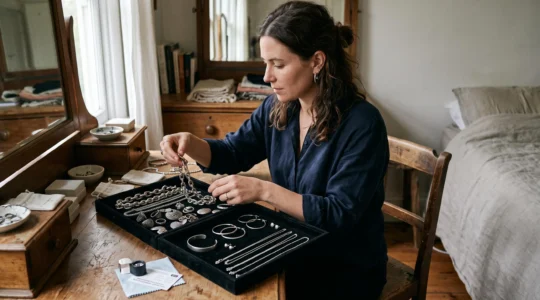
How to Balance Trendy Silver Pieces With Timeless Investment in Your Collection
A bold silver cuff can transform an outfit today and feel overexposed next season. A simple sterling chain might never attract the same attention, yet become the piece you wear for years. Building a satisfying silver jewelry collection means recognizing…
Lire la suite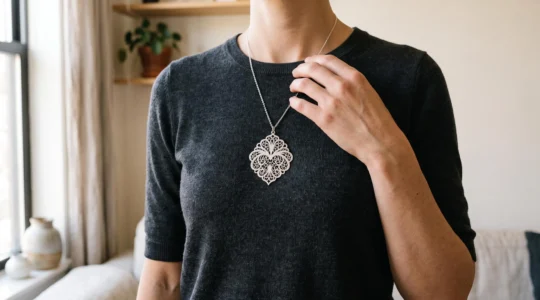
How to Wear Filigree Silver Frameworks Without Looking Costume-Like
Ornate silver filigree can look distinctly contemporary without sacrificing the elaborate craftsmanship that makes it appealing. The difference often lies in how the piece interacts with clothing: its silhouette, surrounding textures, position on the body, and surface finish can make…
Lire la suite
How to Match Silver Jewelry Finishes to Event Formality Without Fashion Missteps
A silver necklace that looks sophisticated at a candlelit dinner can feel overly reflective in a morning meeting. An oxidised ring that complements a relaxed garden wedding might seem out of place beside a sharply tailored evening outfit. The difference…
Lire la suite
Which Silver Jewelry Actually Survives Gyms, Gardening and Childcare?
The silver bracelet that survives a morning commute may not survive a toddler’s determined grip. A necklace that feels perfectly comfortable during a workout can still catch on equipment, while an elegant gemstone ring may trap gardening grit beneath its…
Lire la suite
How to Build a Wearable Jewelry Wardrobe That Works From Office to Evening
A successful office-to-evening jewelry wardrobe does not require separate collections for work and social occasions. It requires a small selection of compatible silver pieces that remain comfortable, visually balanced and appropriate as your schedule changes. The practical starting point is…
Lire la suite