Beauty and Elegance
Beauty and elegance are two words often used together, yet they describe very different ideas. In the world of jewelry and fine adornment, understanding what separates the two — and how they work in harmony — is the key to building a collection that feels truly personal and timeless. Think of beauty as the spark that catches the eye, and elegance as the quiet confidence that holds it. A brilliant diamond ring may be beautiful; a simple pearl strand worn with poise may be elegant. The most memorable pieces manage to be both.
This pillar page introduces the essential concepts behind beauty and elegance in jewelry: the principles of design, the role of gemstones and metals, the psychology of adornment, and the practical choices that help anyone — from complete beginner to seasoned collector — wear pieces with grace and confidence.
What Do Beauty and Elegance Really Mean in Jewelry?
Beauty, in jewelry terms, is largely about sensory and emotional impact: color, brilliance, rarity, and the story a piece tells. Elegance, on the other hand, is about restraint, proportion, and suitability. An elegant piece never shouts; it complements the wearer rather than competing with them.
A helpful analogy is the dinner table. Beauty is the spectacular centerpiece — the elaborate floral arrangement everyone photographs. Elegance is the quality of the linen, the weight of the silverware, the calm symmetry of the setting. Remove either one and the experience feels incomplete.
- Beauty: brilliance, color, craftsmanship detail, emotional resonance, rarity.
- Elegance: proportion, simplicity, harmony with the wearer, appropriateness for the occasion.
- Timelessness: the ability of a piece to remain relevant across decades and trends.
The Design Principles Behind Elegant Jewelry
Jewelers, like architects, rely on principles of composition. Understanding them helps you evaluate any piece — whether a vintage brooch or a contemporary solitaire — with a trained eye.
Proportion and Scale
Proportion is perhaps the single most important factor in elegance. A pendant that overwhelms a delicate neckline, or a ring so wide it covers two fingers, disrupts visual balance. As a practical benchmark, many stylists suggest that jewelry should occupy roughly one-third of the visual zone it sits in — a pendant should cover about a third of the open neckline, for instance. This is not a rigid rule, but a starting point for developing your own judgment.
Symmetry and Balance
Perfect symmetry communicates formality and calm, which is why solitaire engagement rings and opera-length pearl strands have endured. Asymmetry, when done deliberately — a single ear cuff, a mismatched earring pair — communicates modernity and playfulness. Both can be elegant; what matters is that the asymmetry looks intentional rather than accidental.
Line and Movement
Elegant jewelry guides the eye. Clean vertical lines — a Y-necklace, elongated drop earrings — visually lengthen the neck and silhouette. Curved lines soften angular features. When trying a piece, notice where your eye travels: elegant designs lead it smoothly, without abrupt stops.
Gemstones: The Color and Light of Beauty
If metals provide the structure of a piece, gemstones provide its voice. Each stone carries its own optical personality and symbolic weight.
The Big Four Precious Stones
Diamonds, sapphires, rubies, and emeralds form the classical core of fine jewelry. Their enduring status comes from a combination of hardness, brilliance, and historical prestige.
- Diamond: unmatched light performance; the benchmark of brilliance and clarity. Its value is assessed through the well-known framework of cut, color, clarity, and carat weight.
- Sapphire: prized for depth of color and durability; blue is classic, but pink, yellow, and padparadscha hues exist.
- Ruby: the color of passion and vitality; fine pigeon-blood specimens command extraordinary prices.
- Emerald: a lush green unlike any other stone, typically carrying natural inclusions affectionately called its « jardin, » or garden.
Semiprecious Stones and Everyday Elegance
Amethyst, topaz, garnet, aquamarine, and pearl deserve far more credit than the outdated « semiprecious » label suggests. A well-cut amethyst in a minimal gold setting can be more elegant than a poorly finished diamond piece. Elegance, remember, lives in execution — not in price alone.
Cut Quality: Where Beauty Is Made
Here is a fact that surprises most beginners: cut affects beauty more than carat weight. Two diamonds of identical weight can differ dramatically in sparkle depending on how precisely their facets are angled. A well-cut stone returns light to the eye; a poorly cut one leaks it out the bottom. When budgeting, prioritizing cut over size is one of the most reliable ways to maximize visual beauty per dollar spent.
Metals: The Frame That Shapes Elegance
The metal you choose sets the temperature and tone of a piece.
- Yellow gold: warm, classic, and flattering to most skin undertones; associated with heritage and tradition.
- White gold and platinum: cool and contemporary; platinum’s density and purity make it a favorite for heirloom pieces.
- Rose gold: romantic and soft; its copper content gives a blush tone that complements warm complexions.
- Silver: accessible and versatile, ideal for everyday minimalism, though it requires regular polishing.
Mixing metals was once considered a faux pas; today, layered mixed-metal looks are widely embraced. The rule of thumb for keeping mixed stacks elegant is consistency in finish and weight — combine polished with polished, delicate with delicate.
The Psychology of Adornment: Why Elegance Feels Good
Jewelry is one of humanity’s oldest forms of self-expression, predating written language. Archaeological finds show shell beads worn tens of thousands of years ago. Wearing beautiful objects is not vanity — it is a deeply human ritual of identity, memory, and belonging.
Psychologically, elegant jewelry works like a well-tailored garment: it signals care and intentionality. Studies in social perception consistently suggest that people make first impressions within seconds, and refined details — a considered watch, a subtle pendant — contribute disproportionately to impressions of competence and polish. This is why jewelry is often described as the « finishing note » of an outfit, much like punctuation in a sentence.
Building an Elegant Jewelry Wardrobe: A Practical Framework
Just as a wardrobe is built around essentials, a jewelry collection benefits from a foundation of versatile pieces before statement items are added. A common starting framework looks like this:
- The everyday anchor: small stud earrings or a fine chain worn daily — pieces you never need to think about.
- The signature piece: one item that expresses your personality, such as a signet ring or a bold cuff.
- The occasion piece: something refined for formal moments, like pearl drops or a delicate tennis bracelet.
- The heirloom or aspiration piece: a quality investment item chosen slowly and kept for decades.
This layering approach prevents the most common beginner mistake: buying many trend-driven pieces that quickly feel dated, rather than fewer, better-chosen items that compound in meaning over time.
Elegance Across Occasions: Matching Jewelry to Context
Suitability is the quiet backbone of elegance. A useful mental model is the « volume dial »: casual settings call for jewelry dialed low (one or two refined pieces), while formal evenings allow the dial to rise.
- Professional settings: favor minimalism — small studs, a slim watch, one ring per hand at most.
- Cocktail events: this is the natural home of a statement piece; let one element lead and keep the rest supporting.
- Black-tie occasions: classic combinations like pearls with diamonds or a single dramatic necklace remain the safest expressions of refined glamour.
- Everyday casual: layering delicate pieces — stacked thin rings, mixed short chains — reads as effortless rather than excessive.
Caring for Beauty: Maintenance as Part of Elegance
An elegant piece is a cared-for piece. Tarnish, dull stones, and loosened settings diminish even the finest designs. A few habits preserve both beauty and value:
- Put jewelry on last, after perfume and lotions, and take it off first.
- Store pieces separately — diamonds can scratch nearly every other gemstone.
- Clean gold and diamonds gently with warm water, mild soap, and a soft brush.
- Have prongs and clasps checked by a professional annually, much like a car’s routine service.
Beauty and Elegance as a Lifelong Language
Ultimately, beauty and elegance are less about following rules and more about developing a personal vocabulary. Beauty draws from color, light, and craft; elegance comes from proportion, restraint, and context. When the two meet — a well-cut stone in a harmonious setting, worn by someone who feels comfortable in it — jewelry becomes more than ornament. It becomes a quiet form of self-knowledge, worn close to the skin.
Whether you are choosing your first fine chain or curating a lifetime collection, let these principles be your compass: favor quality over quantity, proportion over size, and personal meaning over passing trends. That is the essence of enduring style — and the heart of everything this category explores.
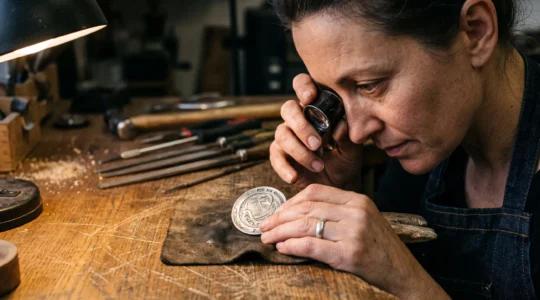
How to Preserve Microscopic Silver Details That Disappear With Improper Care
The finest details on silver jewellery are often the first to disappear during routine care. A shallow hand-engraved line, a miniature hallmark or a row of millgrain beads may withstand decades of careful wear yet gradually lose definition when repeatedly…
Lire la suite
Which Silver Finishes Provide Subtle Shimmer Without Distracting Glare?
Brushed satin and fine matte silver finishes are among the most reliable choices for subtle shimmer without distracting glare. Both soften the mirror-like reflections associated with highly polished metal, although satin retains a delicate sheen while matte offers a quieter,…
Lire la suite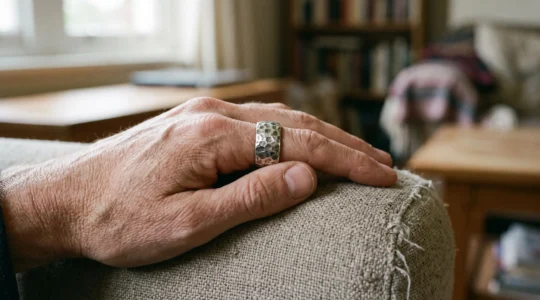
How Tactile Jewelry Design Engages the Senses Beyond Visual Appeal
A silver ring can do more than catch the light. Its ridges may guide a thumb, its curved surface may settle comfortably against a finger, and a rotating band may offer a small, repeatable movement. These sensations create a relationship…
Lire la suite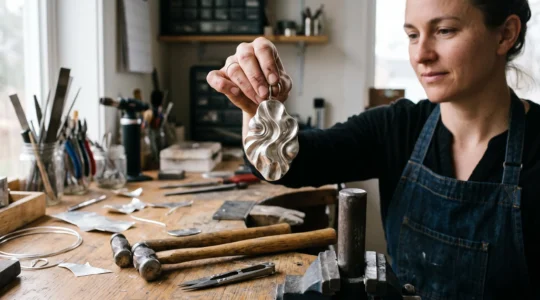
How Sculptural Three-Dimensional Forms Transform Silver Into Collectible Art
A silver pendant can be an ornament, a miniature sculpture, or both. The distinction emerges when a metalsmith treats the material as a three-dimensional medium, shaping volume, tension, negative space and movement rather than simply decorating a surface. Sculptural silver…
Lire la suite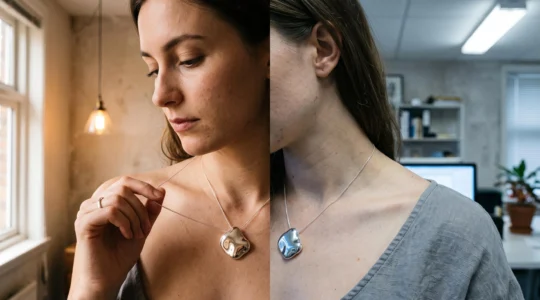
How to Choose Silver That Looks Stunning in Any Lighting Condition
A silver necklace can sparkle beautifully beside a sunny window, appear almost white beneath office lighting, and look surprisingly understated at dinner. The metal has not changed. The light reaching its surface, the surrounding reflections, and the viewing angle have….
Lire la suite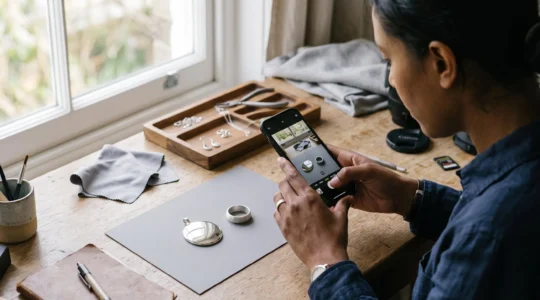
How to Choose Silver That Photographs Brilliantly for Social Media
A silver necklace that sparkles beautifully in person can look unexpectedly dark in a smartphone photograph. Another piece may turn into a distracting white reflection beneath a ring light. These differences often come down to the jewellery’s surface finish, the…
Lire la suite