Stones and Ornaments
Welcome to the world of stones and ornaments, where nature’s most remarkable creations meet human artistry. Whether you are choosing your first piece of jewelry, trying to understand why one sapphire costs ten times more than another, or simply curious about what makes a gemstone truly precious, this page is designed to give you a solid, reassuring foundation. Think of it as a map: each section below explores a key territory of jewelry and gemology, so you can navigate your future purchases and conversations with jewelers in complete confidence.
What Are Stones and Ornaments? A Clear Definition
In the jewelry world, stones designate the gems — diamonds, rubies, emeralds, sapphires, pearls and many more — while ornaments refer to the finished decorative pieces that showcase them: rings, necklaces, earrings, bracelets and brooches. The two are inseparable in practice. A gemstone is like a great actor, and the ornament is the stage: the setting, the metal, the design all determine how the stone performs.
Understanding this relationship is the first step toward becoming a savvy buyer. A magnificent stone in a poorly designed setting loses its charm, and an elegant ornament with a low-quality gem never achieves its full value.
The Great Families of Gemstones
Gemstones are traditionally organized into categories based on rarity, hardness and market value. Here is how professionals classify them:
- Precious stones: traditionally limited to diamond, ruby, sapphire and emerald. These four hold the highest prestige and value.
- Fine (semi-precious) stones: a large family including amethyst, topaz, garnet, aquamarine, tourmaline, peridot and citrine. The term « semi-precious » can be misleading — a exceptional tourmaline can be worth more than a mediocre ruby.
- Organic gems: pearls, coral, amber and jet. These come from living organisms rather than minerals.
- Ornamental stones: materials like lapis lazuli, malachite, onyx and jade, valued for color and pattern rather than brilliance, often used in decorative objects and beads.
A helpful analogy: think of gemstones as musical instruments. Diamonds are the piano — universally recognized. Fine stones are the violin, cello, flute — each with its own character, and a virtuoso player can make any of them shine.
The Four Pillars of Gem Quality: Understanding the Criteria
Professionals evaluate colored stones and diamonds using remarkably similar logic. For diamonds, the industry uses the famous 4 Cs, and the same principles extend, with nuances, to all gems:
- Color: for colored stones, this is the dominant criterion. Experts assess hue (the actual color), saturation (intensity) and tone (lightness or darkness). A pigeon-blood ruby or a royal blue sapphire commands extraordinary prices.
- Clarity: the absence of inclusions. Beware of the myth — inclusions are not always defects. They are nature’s fingerprint, and some (like the « silk » in certain sapphires) can even enhance beauty.
- Cut: the only criterion entirely in human hands. A well-executed cut maximizes brilliance and symmetry. A diamond’s cut grade often matters more than its clarity grade for visual sparkle.
- Carat: a unit of weight, not size. One carat equals 0.2 grams. Crucially, price increases exponentially with weight: a two-carat stone is typically far more than double the price of a one-carat stone of equal quality, simply because large clean crystals are rarer.
Concrete example: two 1-carat emeralds may differ by a factor of five in price purely due to color saturation and the visibility of inclusions. This is why learning to read a quality certificate is one of the most valuable skills a jewelry enthusiast can develop.
Natural, Treated, Synthetic and Imitation: Knowing What You Are Buying
This is perhaps the most confusing area for beginners, yet the most important. Let’s demystify it with clear categories:
- Natural untreated stones: extracted from the earth and sold as-is. The rarest and most valuable category.
- Treated natural stones: genuine gems whose appearance has been improved — heat treatment for sapphires, oiling for emeralds, irradiation for blue topaz. Most of these practices are accepted and stable, but they must be disclosed.
- Synthetic (lab-grown) stones: chemically identical to natural gems but grown in a laboratory. Lab-grown diamonds have become a major market segment, offering excellent value for buyers who prioritize size and budget.
- Imitations: different materials that merely look like gems — cubic zirconia imitating diamond, glass imitating anything. Perfectly acceptable in fashion jewelry, but sold at fashion jewelry prices.
The key principle: none of these categories is inherently « wrong. » What matters is transparency. A reputable seller always states clearly what you are buying, and a certificate from an independent laboratory (such as recognized gemological institutes) is your best protection.
Metals and Settings: The Ornament Half of the Equation
A stone never works alone. The metal frame and setting style profoundly influence both the look and the durability of a piece. The most common choices:
- Gold (yellow, white, rose): the classic. Its purity is measured in karats — 18k gold contains 75% pure gold, balancing richness and strength.
- Platinum: denser, more durable and naturally white, ideal for holding valuable diamonds securely over decades.
- Silver: affordable and beautiful for fine stones and ornamental pieces, though it tarnishes and suits everyday wear rather than heirloom pieces.
Setting styles deserve attention too. A prong setting lifts the stone to maximize light and brilliance; a bezel setting wraps the stone in metal for maximum protection — perfect for an active lifestyle; pavé settings embed small diamonds along the band for continuous sparkle. Choosing the right setting is a balance between aesthetics and how the piece will actually be worn.
How to Choose a Stone or Ornament With Confidence
Armed with the fundamentals, here is a practical roadmap for any purchase:
- Define the purpose: an engagement ring worn daily needs durability (diamond, sapphire, platinum); a cocktail ring worn occasionally opens the door to softer, more original stones.
- Set your budget first: decide the amount before falling in love with a stone, and remember that a smaller, higher-quality gem often outperforms a larger, mediocre one.
- Prioritize what you can see: color and cut affect beauty most visibly; minute clarity differences are rarely noticeable to the naked eye.
- Ask for documentation: always request a certificate for stones of significant value, and keep it with the piece.
- Buy from trusted sellers: a jeweler who takes time to explain, discloses treatments willingly and offers return options is showing you the markers of reliability.
Caring for Your Stones and Ornaments
Precious pieces are durable but not indestructible. Simple habits preserve their beauty for generations:
- Clean gently with lukewarm water, mild soap and a soft brush; avoid ultrasonic cleaners for emeralds, pearls and treated stones.
- Remove rings before swimming, gardening or sports — impacts and chlorine are the leading causes of damage.
- Store pieces separately, ideally in soft pouches, because a diamond can scratch every other gem and even gold.
- Have prongs and clasps checked by a professional regularly; a five-minute inspection can prevent the loss of a treasured stone.
Begin Your Journey Through Stones and Ornaments
The world of stones and ornaments rewards curiosity. Every gem tells a story of geology measured in millions of years, and every ornament reflects a craft tradition refined over centuries. You do not need to become a gemologist to make excellent choices — you simply need reliable knowledge, and that is exactly what this category is here to provide. Browse the sections, take your time, and enjoy the fascinating journey that each stone and each ornament invites you to take.
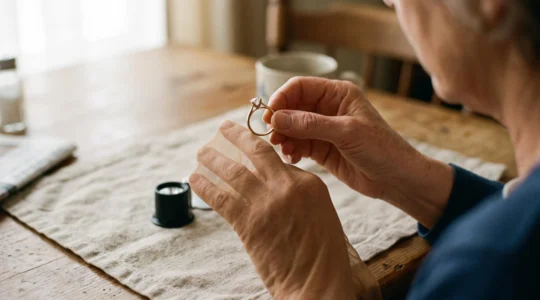
How to Assess Whether a Stone Setting Will Survive Daily Wear
A gemstone can appear securely mounted while the metal holding it has already begun to wear. For jewelry worn daily, setting security depends on more than the number of prongs or the strength of the gemstone. The construction of the…
Lire la suite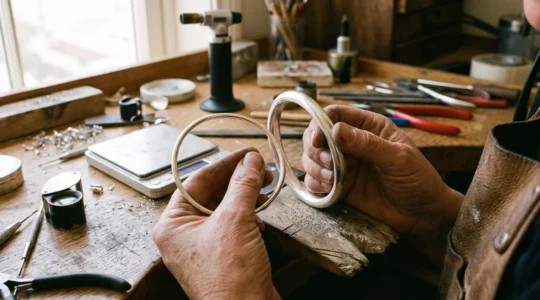
Does Solid-Cast Silver Jewelry Justify Paying 3-5× More Than Hollow?
A £450 solid-cast silver bangle and a £120 hollow alternative can look remarkably similar on the wrist. Their £330 price difference, however, may reflect substantial differences in silver content, structural resistance, repair potential and manufacturing quality. Whether that premium represents…
Lire la suite